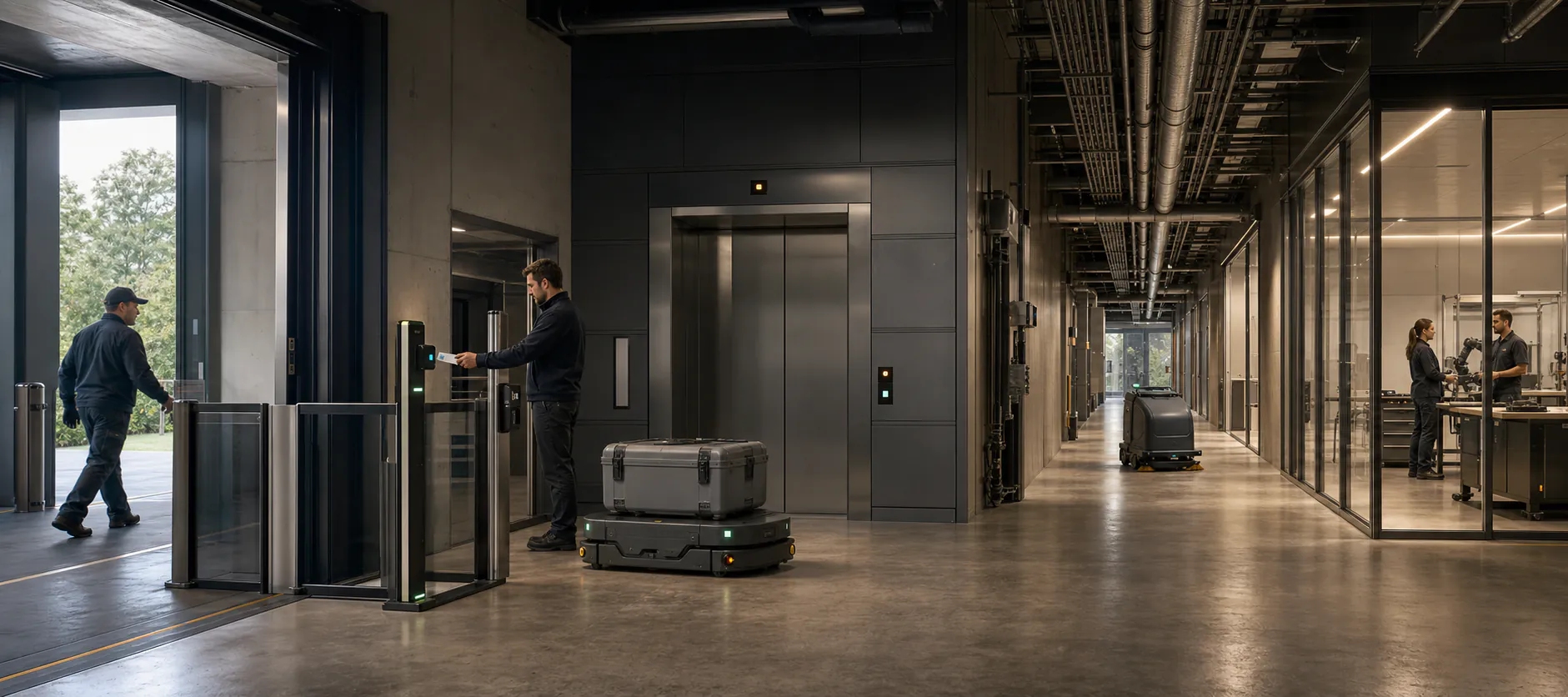
See the operation, not the consoles
Give operators one live view of the whole operation instead of asking them to reconstruct it screen by screen.
The Physical AI Operations Platform
I'm QuikSync. I make your robots, lifts, building systems, and people run as one seamless operation, not five consoles someone watches at once. Work keeps moving, failures get recovered under accountable authority, and every action stays on the record from intent to outcome. I grow around the operations people bring me, so the bespoke capability your site needs next is days away, not quarters.








 IMDA AI & 5G Grant Recipient
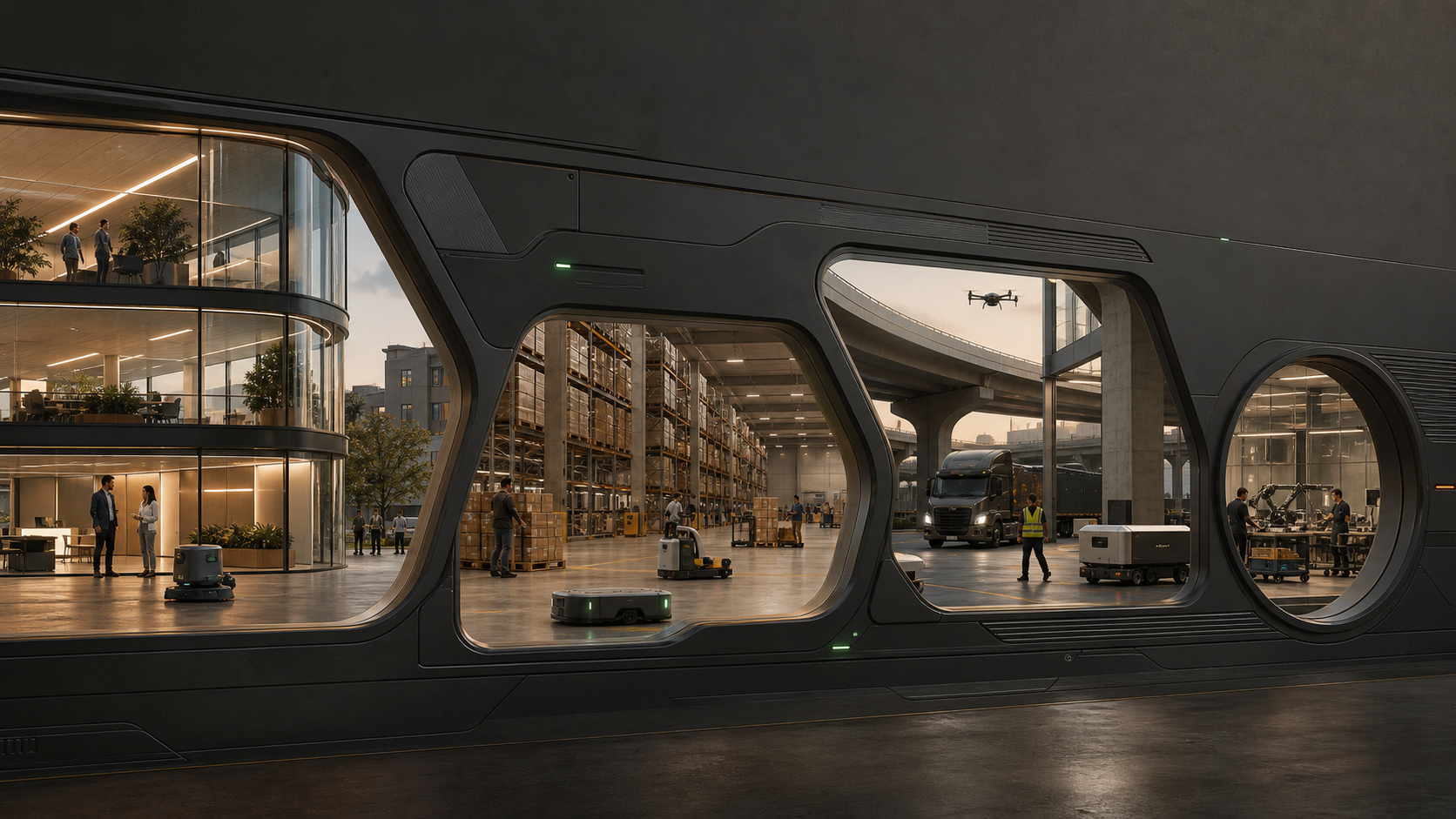
The islands an operation has to connect
The enterprise gap
A humanoid can do a backflip. It still can't bring you a coffee—through the lobby, the lift, and the tenant policy between it and the espresso machine. Large physical estates already have automation, and every 'autonomous' deployment quietly employs people to monitor, tweak, and rescue it. Those people are hidden behind the automation rather than in authority over it. What they lack is the operations platform that makes the systems they already run behave like one accountable operation, without replacing the specialists that already work. That's the gap I exist to close.
Give operators one live view of the whole operation instead of asking them to reconstruct it screen by screen.
A failed hand-off becomes contextual work with an owner, an escalation, and a recovery on the record. That cuts the time and risk hidden inside another alert.
What one delivery teaches becomes product. The integrations built, the workflows tuned, the permission cases settled. The second operation starts with more product, not another blank project.
The whole product
01
A lift, a robot, and the delivery they share become one operational world. Every application in the estate reads that world the same way.
02
You build workflows, operator surfaces, copilots, and purpose-built applications on the canvas yourself, and each inherits the same world, permissions, integrations, and evidence.
03
Declared outcomes become coordinated work across whoever is eligible and free, matched on live context. One mind for many machines.
04
Identity, tenancy, eligibility and human authority sit between software intent and physical action. Every consequential action will answer to someone.
05
A neutral connector plane works through what you already run. Machine controllers, building systems, and the enterprise software above them.
06
One operational record explains what happened now and becomes the ground truth for better applications, evaluation, policy, and intelligence over time.
One operation across the estate
Watch a single job. A pallet moves from the loading dock to a tenant on the eighth floor, across a robot fleet, two lifts, an access-controlled door, and the person who signs for it. Four vendors, none of which planned to cooperate. Today that job succeeds because someone holds the seams together by hand. QuikSync makes it one governed operation.
01 / Intent
An operator or enterprise system declares the material outcome, destination, timing, and service conditions before any resource is selected.
02 / Model
QuikSync resolves what the job actually touches. Which lifts, which robots, which people, and what each one is doing right now.
03 / Compose
A machine-readable workflow states which hand-offs happen, which steps stop for approval, and which resources are shared.
04 / Allocate
Live context matches each step to whoever is eligible and free right now. A person, an agent, a machine, or the lift all three are waiting on.
05 / Execute
Authority is resolved for the work, then validated connectors carry the command into existing commercial, industrial, facility, and machine systems.
06 / Operate
Operators retain control while progress, exceptions, actions, and available evidence return to the same operational world.
Representative work across the physical estate
QuikSync is built for any operation where a software decision has to cross a person, a machine, and the building between them. These representative operations show one horizontal product expanding across an enterprise estate.
Carry time-critical work from the receiving dock to the point of use, across the robots, the doors, and the people in between. Every hand-off stays visible.
Run deliveries, service rounds, and access-dependent work across the lifts, the doors, and the tenants of one building. Then repeat it across the portfolio.
Let an agent investigate a stalled operation, assemble live context, propose a bounded recovery, and route consequential action through the right human authority. The platform watches while you sleep; the right person wakes with context.
Bring a humanoid into an operation that already knows the building, the work, and who may authorise what. It arrives to a job, not to an empty site.
Different by design
Dashboards observe a system. Integrations connect two endpoints. QuikSync owns the operational boundary where software decisions carry physical consequence across shared resources and accountable authority. Four operating models answer that differently, and the table below asks each of them the same four questions, answered from representative products' and projects' own current documentation, read in July 2026.
Built to fit
On a standardised platform, your operation adapts to the product. Customisation gets scoped out, diluted, or priced out of reach. QuikSync inverts that. The operation, as it actually runs, is declared as data the platform executes, so alignment costs configuration rather than engineering, and it keeps evolving long after go-live.
The platform compounding loop
Fit is no longer the opposite of scale. One commissioned operation produces a world model, a set of connectors and a set of settled permission cases, and the next site starts from all three. Services-shaped entry, product-shaped margins. The moat accumulates as data, not code forks.
01
Begin where people currently bridge consoles, vendors, infrastructure, and exceptions by hand.
02
Turn what the delivery produced into product we own and version like everything else we ship.
03
Each new facility, portfolio, use case, and machine inherits a working operational language, execution boundary, and evidence base instead of starting from zero.
Product maturity
Purpose-built for the shared boundary
Embodied intelligence keeps autonomy. Machine safety systems keep machine safety. Machine and facility controllers keep device control. QuikSync governs what happens between them. The work, the shared resources, and who may act.
01 / Intent
02 / QuikSync
03 / Connector boundary
04 / Physical estate
Built for the estate that exists, and the bodies arriving next
Turn the lifts, the doors and the delivery rounds of a property into one governed operation. Then run the same thing across the portfolio.
Connect receiving, storage and the hand-offs between them without replacing a single controller.
A robot or a humanoid arrives intelligent. It does not arrive with the building's access rules, the customer's work, or the authority to act. Build one connector; join every operation.
Turn hard-won delivery knowledge into reusable operational products instead of repeating bespoke connections at every site.
The category thesis
The internet got HTTPS. The cloud got identity and access. Physical AI still has nothing between intent and actuation. Machine intelligence, agents and edge compute are advancing quickly, yet large estates still rely on people to hold the seams together by hand. QuikSync is that operating layer: the live world, the governed execution, and the compounding record that let every present and future embodiment take part in accountable enterprise work. The bodies will be commoditized; the operation will not, and the operation is what QuikSync owns.
Co-develop your first operation
This is the part I can't do alone. Bring us the operation your current stack works around, and we'll turn it into a governed product that can expand across more systems, sites, use cases, and machine generations without starting over.